
Buying
HowtoBuyPropertyinSanMigueldeAllendeasaForeigner
No fideicomiso, a closing budget of about 5–5.5% and a notary who does far more than witness signatures: a local's guide to buying property in San Miguel de Allende from abroad.
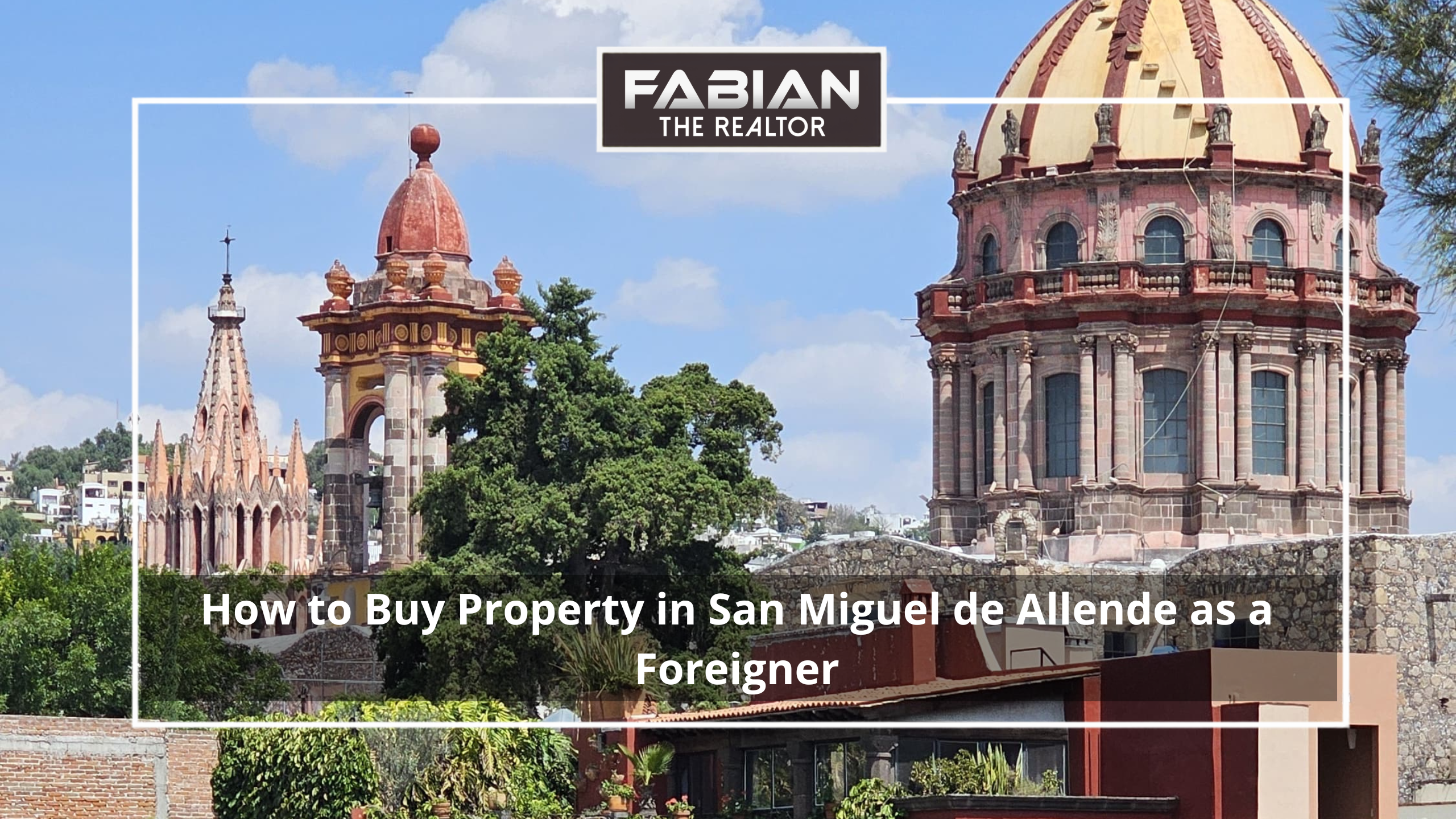
I was born and raised in San Miguel de Allende, and I have watched many buyers fall in love with a house on the first visit. It is easy to do: the light, the rooftops, the carved stone. The hard part is knowing what lies behind that façade, and that almost never shows up in the listing.
Every neighborhood is its own market
San Miguel does not have one real estate market. It has many, and they are small.
Centro Histórico. Everything is walkable and demand is constant. In exchange you get cobblestone streets, scarce parking, church bells, fireworks and festivities for much of the year.
San Antonio and Guadiana. A few minutes' walk to Centro, with more of a neighborhood feel and flatter streets.
Atascadero, Balcones and Ojo de Agua. Set on the hillside with the best views, but with steep streets you should walk before deciding.
Los Frailes and Club de Golf Malanquín. More space, a garden and a garage, but you will depend on a car.
Within a single neighborhood, one block changes the value: the orientation, whether the street is a procession route, whether there is an event venue nearby, or whether the neighbor can build and block the view.
See how the neighborhoods compare.
What the listing does not tell you
Before making an offer, these are the points I review with every client:
Legal status of the land. On the outskirts there is land of ejido (communal) origin. If it never completed the process of becoming private property, it cannot be deeded as such.
Water. Supply is not the same in every area. In the countryside you need to know whether the property depends on a well, on water trucks or on the municipal network.
Permits and zoning. What is built matters, and so does whether it was built with a license, especially if you plan to rent it out or run a business.
Historic district rules. Centro has been a UNESCO World Heritage site since 2008. Renovations there require approval from INAH, the national heritage institute, in addition to the municipal permit, which determines what you can change and how long it takes.
Physical condition. Moisture, old electrical systems, drainage and roofs are where unexpected costs appear.
If you are buying from abroad
San Miguel is in the interior of Mexico, outside the restricted zone along the coasts and borders. That means a foreigner can hold title directly, with the deed in their own name, with no need for a bank trust (fideicomiso). All that is required is the corresponding permit from the Ministry of Foreign Affairs (SRE), which the notary handles.
A Notario Público in Mexico is not simply a witness to signatures. A notario is an attorney vested with public authority who reviews the property's title history, calculates and withholds the taxes on the transaction, and records the deed in the Public Registry.
Closing costs when buying in San Miguel de Allende
Total closing costs for a cash purchase in San Miguel run roughly 5.2%–5.5% of the price, with the biggest single line item being the ISAI acquisition tax, which can reach up to 4% in the top bracket. Notary fees, registry, and appraisal make up the rest.
Municipal acquisition tax (ISAI): 4% of the sale price.
Notary professional fee: 1.0% of the sale price.
VAT (IVA) on the notary fee: 16% of the notary fee.
Fiscal appraisal fee: 0.1% of the sale price.
Foreign Ministry (SRE) permit: $8,500 MXN, fixed per person.
Public Registry fee: $2,575 MXN, fixed.
Non-lien certificate: $1,000 MXN, fixed.
No property-tax-debt certificate: $300 MXN, fixed.
Total: approximately 5.20% of the sale price.
The team behind a purchase
A well-run transaction involves more people than most buyers expect:
An expert real estate agent and their legal team, for the purchase agreement and legal review.
A Notario Público, for the deed.
A certified appraiser.
An inspector and, for land, a surveyor.
An architect or builder, if there will be construction.
An escrow agent.
A property manager, if you will not live here year-round.
Knowing whom to call, and who answers quickly and does good work, is part of the service. Beyond selling, I have built and remodeled homes here, so I can tell you quite precisely what a project involves before you buy it. I take part in one or two construction projects a year, and that experience can be a real help to you.
After the deed
The practical questions begin when you get the keys: electricity, water and internet contracts, property tax, household staff, the move and, almost always, some improvement. Still having a local contact at that stage saves weeks.
Frequently asked questions
Do I need a fideicomiso to buy in San Miguel de Allende?
No. Because San Miguel is outside the restricted zone, a foreigner can take title directly in their own name.
How long does a purchase take?
On average, once an offer is accepted it takes 30 to 60 days to sign the deed and take possession of the property.
Can I buy without being in Mexico?
Yes, through a power of attorney granted to someone you trust. Even so, I recommend coming at least once to see several options, so you can be confident that what you are buying is what you are really looking for, in both the house and the location.
Once you have chosen the house, the closing can be handled remotely: the offer, opening the escrow account, signing the purchase agreement, and the legal and physical inspection of the property. The public deed can also be signed through a power of attorney; I help you prepare it and walk you through the process.
Which neighborhood is best for renting?
It depends on your tastes, the length of your stay and your needs. For example:
Centro: for a short stay where you want everything close at hand and want to feel the town to the fullest.
San Antonio, Guadiana or Guadalupe: for a longer stay, away from the noise and traffic of Centro but still close to everything.
Thinking about buying?
Email me at [email protected] and let's talk about which neighborhood fits the way you live.